EUS
Close ultrasound imaging and selected guided procedures.
Procedure focus · PURPOSE BEFORE TECHNOLOGY
Selected digestive, pancreatic and bile-duct conditions can be diagnosed or treated through an endoscope. The expertise lies in choosing the right procedure for the right reason.
Request a consultation ↗
Question · route · instrument · intervention · review
AI-assisted editorial equipment visual — no actual procedure shown01 / THE DIRECT ANSWER
Therapeutic endoscopy uses specialised instruments passed through an endoscope to treat selected conditions without conventional open surgery. Depending on the problem, this may involve opening a narrowed passage, removing a difficult stone, controlling bleeding, obtaining targeted tissue or performing treatment within the wall of the digestive tract.
Close ultrasound imaging and selected guided procedures.
Therapeutic access to defined bile-duct or pancreatic-duct problems.
Direct visualisation within the bile duct in selected cases.
Pressure and movement assessment for swallowing or motility questions.
Selected third-space procedures after careful suitability assessment.
Closer inspection of subtle surface patterns when clinically relevant.
Each route answers a different question. These restrained diagrams explain purpose without pretending to be patient footage or a diagnostic result.
The instrument, route and target depend on the procedure and the clinical question.
AI-assisted editorial equipment visual — no actual procedure shown
Results are interpreted alongside symptoms, medicines, metabolic risk and imaging.
AI-assisted editorial visual using abstract, de-identified documents
Timing, swallowing, meals, previous treatment and warning signs are considered together.
Conceptual educational visualisation — not diagnostic imageryDefine the problem, alternatives, expected benefit and individual risk.
Confirm medicines, fasting or bowel preparation, consent, escort and venue.
Examine, sample or intervene only within the agreed clinical purpose.
Follow observation, transport, eating, medicine and warning-sign instructions.
Connect immediate findings and later reports to the next management step.
Dr Jain’s advanced endoscopy scope includes therapeutic endoscopy, EUS-guided procedures, SpyGlass cholangioscopy, magnifying endoscopy, POEM and STER, alongside advanced pancreatic therapeutic ERCP training.
A sophisticated procedure is useful only when it changes care. The decision depends on the diagnosis, expected benefit, alternatives, procedural risk, available technology and where the intervention can be performed safely.
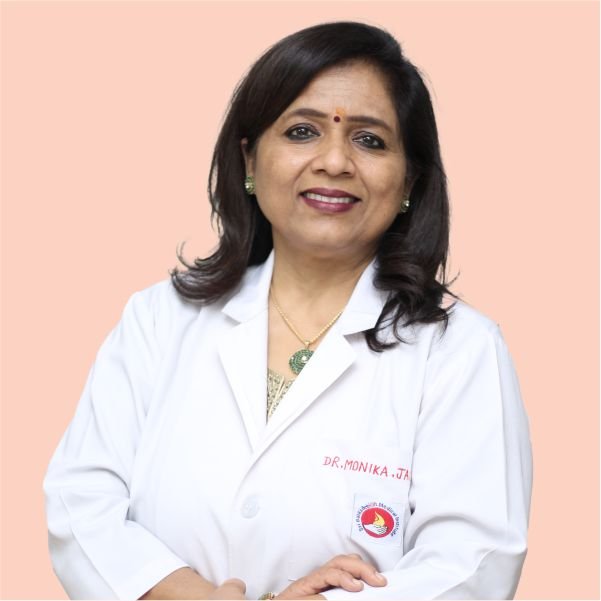 Dr Monika Jain
EXPERIENCE WITH RANGE
Dr Monika Jain brings more than three decades across medical gastroenterology, hepatology, diagnostic and therapeutic endoscopy, clinical leadership and specialist teaching. For decisions involving therapeutic endoscopy with a clear purpose, that range helps keep investigation and treatment connected to a defined purpose.
Meet Dr Jain and review her professional journey ↗Clear general guidance, with the limits made visible.
Therapeutic endoscopy uses specialised instruments through an endoscope to treat selected conditions, not only inspect or diagnose them.
For some defined problems it may offer a less invasive option, but suitability depends on diagnosis, expected benefit, alternatives, risk and available expertise.
EUS provides close ultrasound imaging and selected sampling or intervention. ERCP is mainly used to treat defined bile-duct or pancreatic-duct problems.
Ask what problem it should solve, what the alternatives are, what meaningful risks apply and how the result will change treatment.
Do not assume so. The consultation locations and procedure venue are separate questions and must be confirmed by Dr Jain’s team.
Yes. Bring the recommendation, imaging, reports, medicine list and the questions that remain unclear to a consultation at either clinic.
Choose the more convenient location for a procedure recommendation, review the real address and let the clinic team confirm Dr Jain’s availability before you travel.
1st floor, No 29, Shivaji Marg, Block C, Moti Nagar, Delhi 110015
Ekta Apartment, A2B/155A, Chaudhary Balbir Singh Marg, A 2 Block, Paschim Vihar, Delhi 110063
THE NEXT LOGICAL QUESTION
A recommendation for EUS, ERCP, SpyGlass, POEM or another advanced endoscopic procedure
These sources support the general educational information. They do not replace individual interpretation.
NIDDK — Endoscopic retrograde cholangiopancreatography (ERCP)↗NIDDK — Upper GI endoscopy↗